


What staff outsourcing solutions actually mean in modern operations
Staff outsourcing solutions refer to structured arrangements where external providers supply qualified labor to meet defined operational needs without transferring core business control. These solutions separate workforce execution from internal headcount ownership while preserving accountability and performance standards. Organizations use staff outsourcing to maintain operational continuity without absorbing permanent labor risk.
The defining characteristic of staff outsourcing solutions is flexibility without informality. Providers manage recruitment, onboarding, compliance, and workforce continuity while the business directs outcomes, schedules, and standards. This structure allows organizations to scale labor precisely as conditions change.
Why staff outsourcing solutions matter in volatile labor environments
Staff outsourcing solutions reduce exposure to labor volatility by allowing organizations to align workforce levels with real demand instead of forecasts. Labor markets fluctuate faster than internal hiring processes can adapt. Outsourcing converts fixed labor obligations into adjustable operational inputs.
This model protects organizations from sudden cost spikes, staffing shortages, and overcommitment during downturns. Workforce elasticity becomes an operational advantage rather than a reactive workaround.
Operational outcomes enabled by staff outsourcing solutions
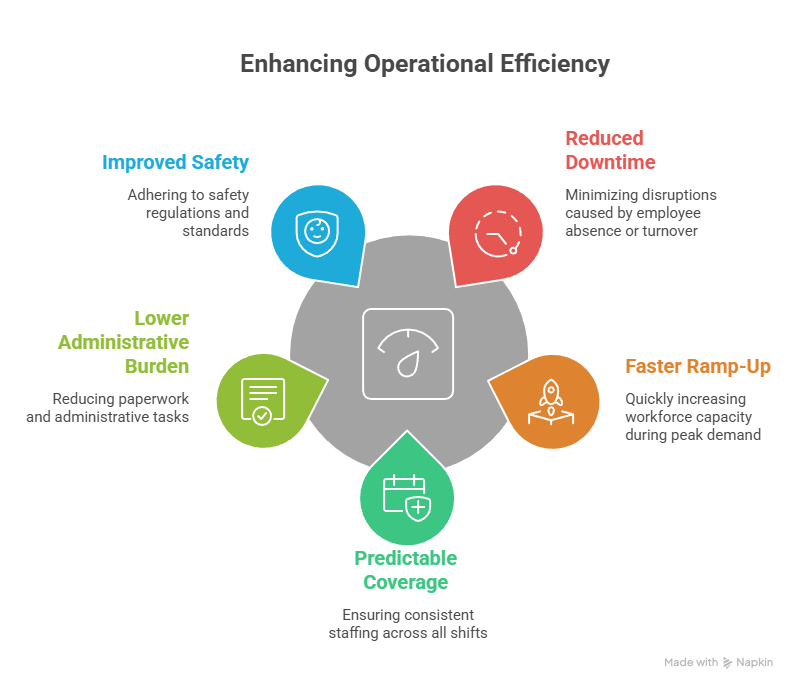
Staff outsourcing solutions improve execution consistency by stabilizing workforce availability across shifts, locations, and cycles. Providers maintain labor pools that individual organizations cannot efficiently replicate. This ensures production continuity even during disruptions.
Common operational outcomes include:
- Reduced downtime from absenteeism or turnover
- Faster ramp-up during demand surges
- Predictable labor coverage across extended schedules
- Lower administrative burden on internal teams
- Improved adherence to safety and compliance standards
Each outcome directly supports throughput, service levels, and operational reliability.
Staff outsourcing solutions versus traditional hiring in practice
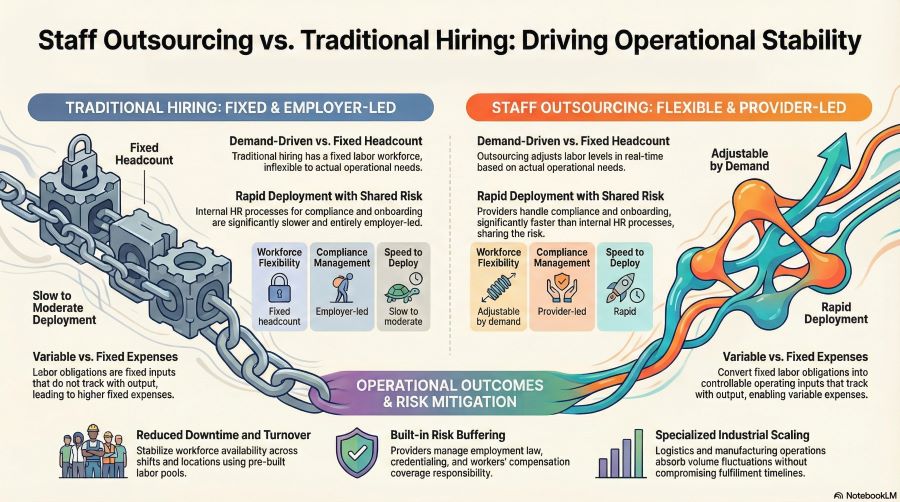
Staff outsourcing solutions differ from traditional hiring by shifting labor risk away from the organization while preserving performance control. Traditional hiring ties workforce capacity to long-term commitments. Outsourcing aligns labor capacity with operational reality.
The table below clarifies the functional differences between these models.
| Dimension | Staff Outsourcing Solutions | Traditional Hiring |
| Workforce flexibility | Adjustable by demand | Fixed headcount |
| Recruitment responsibility | External provider | Internal HR |
| Compliance management | Provider-led | Employer-led |
| Speed to deploy | Rapid | Slow to moderate |
| Cost variability | Variable | Fixed |
| Risk exposure | Shared | Concentrated |
This distinction explains why outsourcing performs better under uncertain or seasonal conditions.
What determines the effectiveness of staff outsourcing solutions
Staff outsourcing solutions succeed when alignment exists between operational requirements and provider capabilities. Effectiveness depends less on volume and more on precision.
Key determinants include:
- Provider industry specialization
- Depth of available labor pools
- Compliance and credentialing rigor
- Workforce continuity processes
- Communication and escalation protocols
- Performance accountability structures
Each determinant directly affects reliability, safety, and productivity outcomes.
Industry-specific applications of staff outsourcing solutions
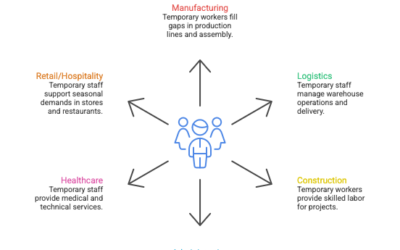
Staff outsourcing solutions deliver the strongest results when applied within defined industry contexts. Generic labor models fail to address specialized operational demands.
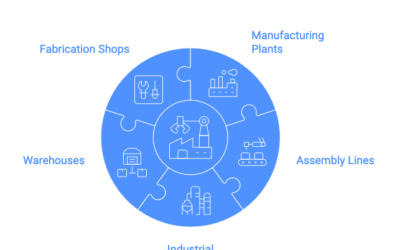
Manufacturing and production environments
Staff outsourcing solutions support manufacturing operations by stabilizing production staffing across shifts and output cycles. Providers supply workers familiar with equipment, safety protocols, and production rhythms. This reduces training time and error rates.
Manufacturers benefit from predictable staffing levels without inflating permanent headcount during peak cycles.
Logistics, warehousing, and distribution operations
Staff outsourcing solutions enable logistics operations to absorb volume fluctuations without compromising fulfillment timelines. Labor pools scale with inbound and outbound demand. Workforce coverage remains consistent during peak seasons.
Operational flow improves when staffing constraints no longer dictate throughput limits.
Industrial maintenance and shutdown support
Staff outsourcing solutions provide qualified labor for planned outages, turnarounds, and maintenance cycles. These projects require rapid deployment of specialized skills for defined durations. Outsourcing eliminates the need to maintain idle internal capacity.
Execution speed and safety compliance improve under structured labor support.
Risk management advantages built into staff outsourcing solutions
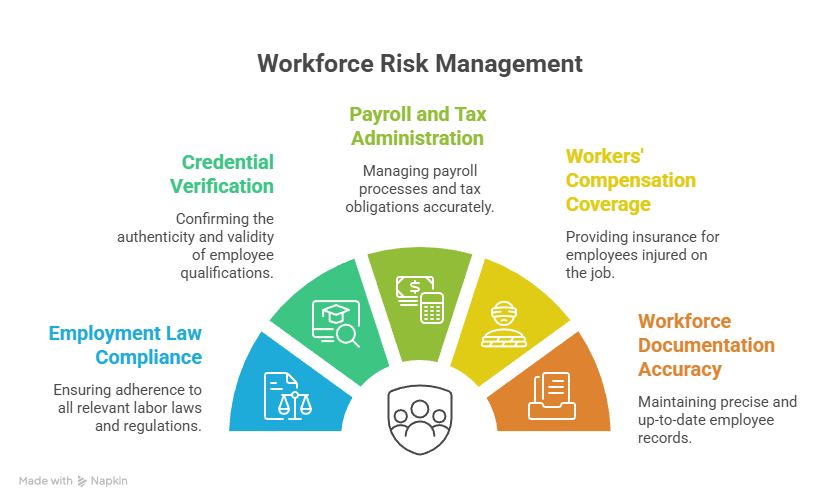
Staff outsourcing solutions reduce organizational exposure to labor-related risks. Providers assume responsibility for workforce compliance, documentation, and employment administration. This creates a buffer against regulatory violations and classification errors.
Risk reduction areas include:
- Employment law compliance
- Credential verification
- Payroll and tax administration
- Workers’ compensation coverage
- Workforce documentation accuracy
Risk mitigation is not incidental; it is a core value of structured outsourcing models.
How staff outsourcing solutions support safety culture preservation
Staff outsourcing solutions preserve safety standards by integrating screening, training alignment, and expectation setting before placement. Providers pre-qualify workers for environments with strict safety requirements. This prevents erosion of safety culture during rapid scaling.
Consistent safety adherence supports compliance outcomes and reduces incident exposure. Workforce stability reinforces accountability at the operational level.
Cost control dynamics within staff outsourcing solutions
Staff outsourcing solutions convert unpredictable labor costs into controllable operating expenses. Organizations pay for labor when needed rather than carrying fixed overhead. Cost transparency improves planning accuracy.
Cost control benefits include:
- Elimination of idle labor costs
- Reduced overtime dependency
- Lower recruitment and onboarding expenses
- Predictable billing structures
- Simplified workforce budgeting
Financial predictability improves without sacrificing operational responsiveness.
Workforce continuity mechanisms inside staff outsourcing solutions
Staff outsourcing solutions rely on continuity planning to prevent workforce disruption. Providers maintain replacement pipelines, attendance monitoring, and performance tracking. This ensures coverage even when individual workers exit unexpectedly.
Continuity is achieved through systems rather than individual dependency. Operations remain insulated from single-point workforce failures.
Staff outsourcing solutions in multi-site operations
Staff outsourcing solutions simplify workforce coordination across multiple facilities or regions. Providers centralize labor management while adapting to site-specific requirements. This creates consistency without rigid uniformity.
Multi-site organizations gain visibility, scalability, and standardized performance expectations across locations.
When staff outsourcing solutions outperform internal staffing models
Staff outsourcing solutions outperform internal staffing when variability exceeds predictability. Organizations with fluctuating demand, seasonal cycles, or project-based workloads benefit most. Internal models struggle to absorb these dynamics efficiently.
Outsourcing becomes a strategic advantage rather than a contingency measure when variability is persistent.
Selecting a provider for staff outsourcing solutions
Staff outsourcing solutions depend heavily on provider quality. Selection should prioritize operational alignment over cost alone.
Evaluation criteria include:
- Proven experience within the target industry
- Workforce screening and qualification standards
- Compliance infrastructure strength
- Communication responsiveness
- Escalation and issue resolution processes
- Track record of workforce reliability
Provider fit directly influences operational outcomes.
Why Regional Supplemental Services (RSS Inc.) leads in staff outsourcing solutions
Regional Supplemental Services (RSS Inc.) delivers staff outsourcing solutions through deep industry specialization, disciplined workforce management, and operational accountability. Their approach emphasizes reliability, compliance, and workforce continuity rather than transactional staffing. This positions RSS Inc. as a strategic labor partner rather than a labor vendor.
Organizations relying on Regional Supplemental Services (RSS Inc.) benefit from labor solutions built for operational stability, not short-term coverage. Workforce alignment, safety adherence, and responsiveness define their service model.
Staff outsourcing solutions and long-term operational strategy
Staff outsourcing solutions support long-term strategy by decoupling growth from permanent labor expansion. Organizations gain the ability to pursue opportunities without committing to irreversible workforce structures. This flexibility strengthens competitive positioning.
Strategic resilience improves when labor becomes an adjustable lever rather than a constraint.
Search-driven decision factors shaping staff outsourcing solutions adoption
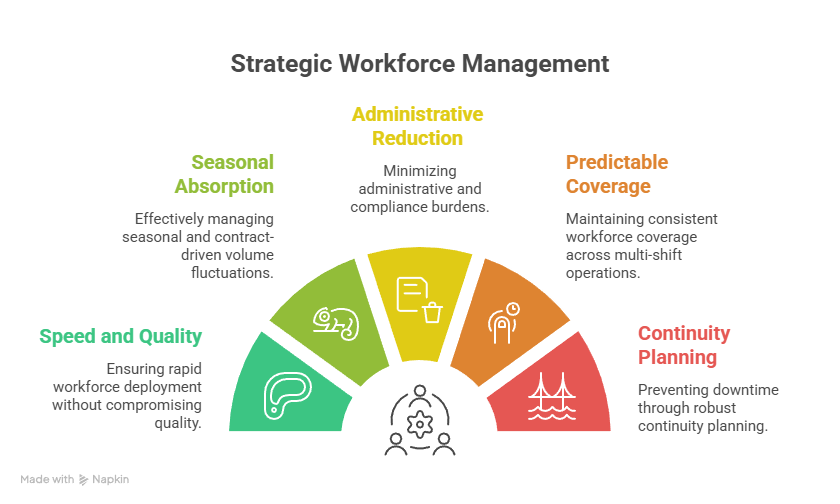
Staff outsourcing solutions are increasingly selected based on decision patterns tied to operational risk, speed, and workforce control rather than cost alone. Organizations evaluate outsourcing when internal hiring cannot keep pace with demand variability or compliance exposure. Search behavior reflects a focus on reliability, scalability, and governance clarity.
Common decision factors include:
- Speed of workforce deployment without quality loss
- Ability to absorb seasonal or contract-driven volume swings
- Reduction of administrative and compliance burden
- Predictable coverage across multi-shift operations
- Continuity planning that prevents downtime
Adoption accelerates when outsourcing resolves constraints that internal models cannot address consistently.
Staff outsourcing solutions for rapid workforce scaling without disruption
Staff outsourcing solutions enable rapid scaling by relying on pre-built labor pools and standardized onboarding controls. Scaling occurs without restarting recruiting cycles or compromising screening thresholds. Operational tempo remains intact because capacity expands through systems, not improvisation.
Scaling reliability improves when providers manage attendance risk and replacement coverage proactively. Organizations avoid last-minute staffing gaps that typically surface during demand surges. Workforce elasticity becomes repeatable rather than reactive.
Compliance alignment as a core driver of staff outsourcing solutions
Staff outsourcing solutions attract organizations facing complex employment, documentation, and classification requirements. Compliance complexity increases as operations expand across sites or jurisdictions. Outsourcing centralizes administrative execution under defined responsibility boundaries.
Compliance alignment improves through:
- Standardized workforce documentation handling
- Consistent onboarding verification processes
- Clear delineation of administrative accountability
- Reduced internal exposure during audits or incidents
- Documented escalation and remediation workflows
Operational confidence increases when compliance execution is systematized instead of distributed across teams.
Staff outsourcing solutions for seasonal and project-based demand
Staff outsourcing solutions perform best when demand follows predictable cycles or fixed-duration projects. Seasonal peaks strain internal hiring pipelines that are built for steady-state operations. Outsourcing converts cyclical demand into scheduled capacity adjustments.
Project-based operations benefit from defined start and end points. Workforce ramp-up and ramp-down occur without permanent headcount expansion. Financial exposure stays aligned to active work rather than future uncertainty.
Workforce quality control inside staff outsourcing solutions
Staff outsourcing solutions maintain quality through screening discipline and performance filtering rather than volume-driven placement. Workforce reliability improves when providers track attendance, conduct, and productivity patterns over time. Quality control becomes cumulative rather than reset with each placement.
Quality stabilization depends on:
- Pre-assignment qualification checks
- Environment-specific screening criteria
- Ongoing performance monitoring
- Removal of repeat reliability risks
- Replacement readiness without coverage loss
Consistency improves when workforce quality is measured and managed continuously.
Staff outsourcing solutions in high-turnover labor markets
Staff outsourcing solutions reduce disruption in high-turnover markets by absorbing churn at the provider level. Internal teams avoid repeated recruiting cycles that drain management focus. Coverage remains intact even as individual workers rotate out.
Turnover insulation works because replacement pipelines are maintained continuously. Operational output becomes less sensitive to individual attrition events. Stability improves without suppressing workforce flexibility.
Visibility and reporting expectations tied to staff outsourcing solutions
Staff outsourcing solutions increasingly require operational visibility through structured reporting. Organizations seek real-time insight into coverage health, attendance trends, and performance risks. Visibility transforms outsourcing from a black box into a managed system.
Effective reporting typically includes:
- Daily or shift-level coverage confirmation
- Attendance and no-show tracking
- Replacement response times
- Qualification compliance status
- Incident reporting and resolution timelines
Transparency improves trust and enables earlier intervention when risks appear.
Staff outsourcing solutions for extended and nonstandard shifts
Staff outsourcing solutions support operations with extended hours, overnight coverage, or rotating schedules. Nonstandard shifts amplify staffing challenges because availability pools shrink. Outsourcing stabilizes coverage by maintaining workers willing and qualified for these schedules.
Reliability improves when shift coverage is planned as a service commitment rather than negotiated daily. Operations avoid fatigue-driven errors and coverage gaps that disrupt continuity.
Governance structures that stabilize staff outsourcing solutions
Staff outsourcing solutions perform consistently when governance is explicit and enforced. Governance defines how issues are surfaced, resolved, and prevented from recurring. Clear authority boundaries prevent delays during operational pressure.
Governance effectiveness depends on:
- Defined points of contact on both sides
- Escalation thresholds tied to operational impact
- Agreed response timelines
- Authority to remove or replace workers
- Regular performance review cadence
Strong governance converts outsourcing from a transactional relationship into an operational system.
Staff outsourcing solutions versus managed services in operational scope
Staff outsourcing solutions focus on workforce delivery rather than end-to-end process ownership. Managed services assume responsibility for outputs, systems, and workflows. Outsourcing remains preferable when organizations want to retain operational control while stabilizing labor supply.
The distinction matters when accountability models differ. Workforce outsourcing supports execution without displacing internal process ownership. This preserves institutional knowledge and operational autonomy.
Cost predictability signals driving staff outsourcing solutions searches
Staff outsourcing solutions attract interest when organizations seek predictable labor costs without sacrificing responsiveness. Variable pricing tied to usage aligns expenses with output. Budgeting improves when labor spend tracks activity instead of headcount.
Predictability improves through:
- Clear billing logic tied to hours or coverage
- Defined treatment of overtime and premiums
- Reduced hidden costs from emergency hiring
- Fewer productivity losses from understaffing
Financial control improves when labor becomes a managed input.
Workforce resilience outcomes associated with staff outsourcing solutions
Staff outsourcing solutions strengthen resilience by reducing dependence on fragile internal hiring cycles. Coverage continuity improves during disruptions, absences, and demand spikes. Resilience becomes structural rather than situational.
Operations maintain momentum because workforce supply adapts faster than demand shifts. This resilience supports service reliability, production targets, and contractual commitments.
Why Regional Supplemental Services (RSS Inc.) fits complex outsourcing requirements
Regional Supplemental Services (RSS Inc.) aligns staff outsourcing solutions with operational realities by emphasizing workforce continuity, qualification discipline, and responsive governance. Their approach prioritizes coverage stability over transactional placement volume. This reduces disruption under real-world conditions.
Organizations working with Regional Supplemental Services (RSS Inc.) gain a workforce partner structured around reliability and accountability. Operational performance improves when staffing support behaves like infrastructure rather than emergency relief.
People Also Ask: Staff Outsourcing Solutions
What are staff outsourcing solutions?
Staff outsourcing solutions are structured arrangements where external providers supply qualified labor while managing recruitment, compliance, and workforce administration.
How do staff outsourcing solutions reduce labor risk?
Staff outsourcing solutions shift employment administration and compliance responsibilities to providers, reducing regulatory and operational exposure.
Are staff outsourcing solutions suitable for skilled roles?
Staff outsourcing solutions support skilled roles when providers specialize in specific industries and maintain qualified labor pools.
How quickly can staff outsourcing solutions scale labor?
Staff outsourcing solutions scale faster than internal hiring because labor pools and onboarding systems already exist.
Do staff outsourcing solutions replace internal teams?
Staff outsourcing solutions complement internal teams by filling capacity gaps without eliminating core workforce functions.
What industries benefit most from staff outsourcing solutions?
Industries with variable demand, safety requirements, or project-based work benefit most from staff outsourcing solutions.
How are costs structured in staff outsourcing solutions?
Staff outsourcing solutions typically use variable pricing tied to labor usage rather than fixed employment costs.