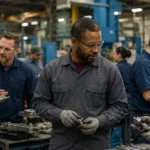
A heavy equipment operator staffing agency is a specialized workforce partner that recruits, screens, verifies, and deploys skilled machinery operators to construction, infrastructure, energy, mining, and industrial employers. These agencies focus exclusively on roles involving complex, high-value equipment such as excavators, bulldozers, graders, cranes, loaders, and articulated trucks.
Unlike general labor staffing firms, these agencies operate within a technical trade environment. They assess machine-specific proficiency, evaluate safety records, confirm certifications, and align operator capability with project demands. The result is a more controlled placement process designed to reduce downtime, safety incidents, and productivity loss.
Organizations use these agencies to stabilize workforce gaps, accelerate project mobilization, and maintain compliance standards without expanding permanent payroll prematurely.
Why Construction and Industrial Firms Rely on Staffing Partners
Construction and heavy industry operate under volatile labor conditions. Project timelines shift, bid wins create immediate workforce needs, and seasonal cycles strain internal recruiting capacity. A specialized staffing partner addresses these operational realities directly.
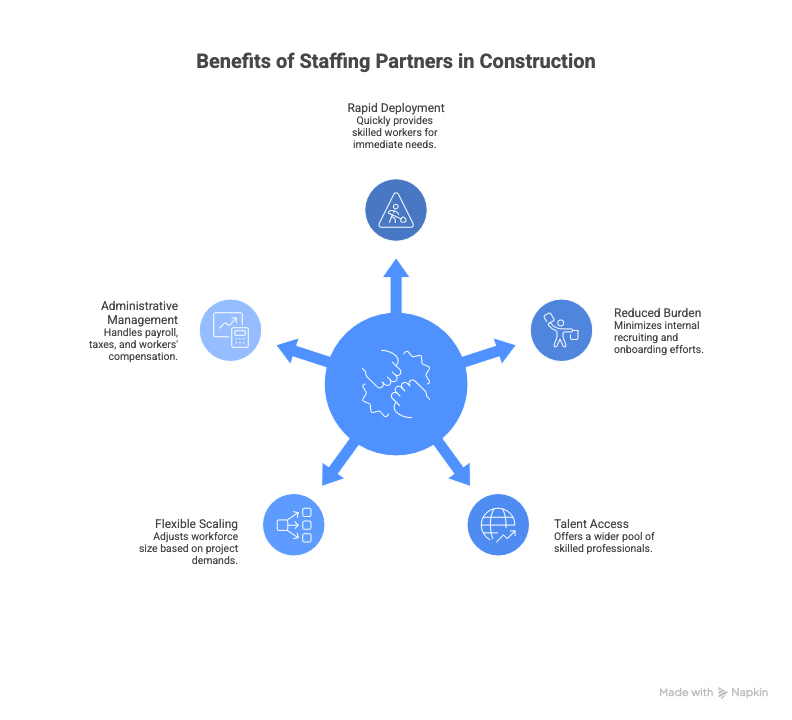
Key advantages include:
- Rapid deployment of pre-qualified operators
- Reduced internal recruiting and onboarding burden
- Access to regional and national talent pools
- Flexible workforce scaling aligned to project phases
- Administrative management of payroll, taxes, and workers’ compensation
Internal HR teams often lack the technical evaluation framework necessary to assess machine-specific performance. A staffing agency fills that expertise gap while absorbing compliance complexity.
The strategic value is not merely filling seats. It is maintaining operational continuity under unpredictable conditions.
How Agencies Evaluate Operator Skill and Safety Readiness
Technical Competency Assessment
Operators are evaluated according to machine specialization. An excavator operator may not be interchangeable with a grader operator, even if both are experienced. Agencies confirm:
- Equipment model familiarity
- Production efficiency history
- Jobsite environment exposure
- Load management competency
- Grade control or GPS system experience
This technical precision reduces reassignments and productivity decline after placement.
Safety Record Verification
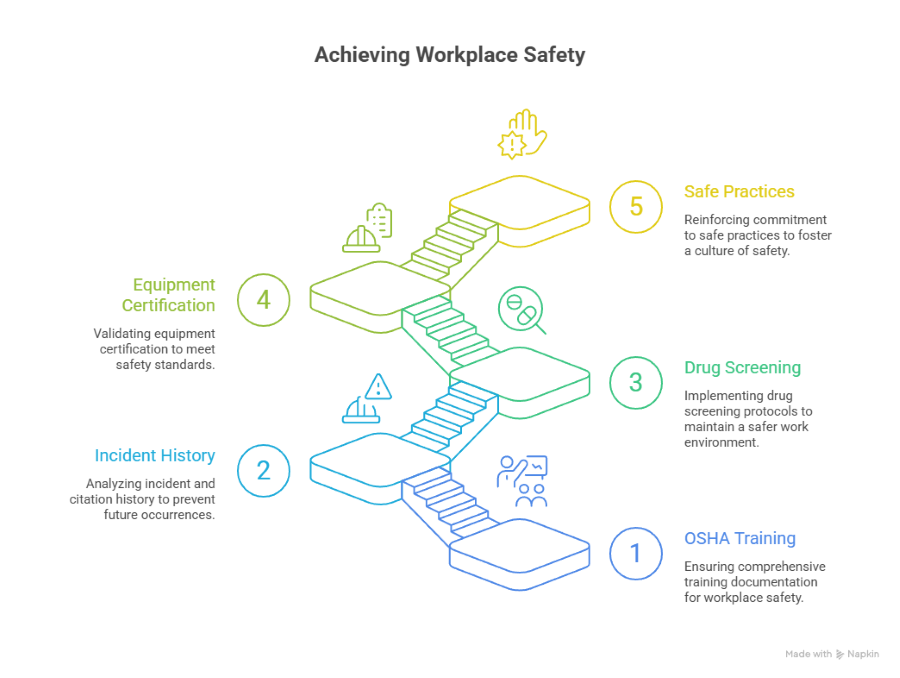
Safety screening is non-negotiable in heavy equipment operations. Agencies examine:
- OSHA training documentation
- Incident and citation history
- Drug screening compliance
- Equipment certification validation
- Reference confirmation of safe practices
Safety failures in heavy equipment environments carry financial, legal, and reputational consequences. Thorough pre-placement validation mitigates those risks before deployment.
When Using a Staffing Agency Is Operationally Justified
Heavy equipment staffing partnerships are most effective under defined conditions. Strategic engagement prevents overreliance while maximizing efficiency.
Use cases include:
- Large infrastructure mobilizations requiring immediate crew expansion
- Short-term municipal contracts with defined completion timelines
- Remote projects lacking local operator supply
- Seasonal surges in excavation or paving work
- Emergency equipment replacement due to injury or turnover
Permanent hiring remains appropriate for stable, long-term operational roles. Staffing agencies function best as a flexibility mechanism within a broader workforce strategy.
Engagement Models That Define Workforce Flexibility
| Engagement Model | Best For | Workforce Commitment Level |
|---|---|---|
| Temporary Staffing | Short-term projects | Low |
| Contract-to-Hire | Evaluating long-term fit | Moderate |
| Direct Placement | Permanent roles | High |
| Project-Based Crews | Full-site mobilization | Variable |
Temporary staffing preserves flexibility. Contract-to-hire reduces permanent hiring risk. Direct placement provides recruiting expertise without long-term payroll administration by the agency.
Selecting the correct model depends on forecast stability, capital allocation strategy, and risk tolerance.
Cost Structure and Financial Considerations
Staffing agency pricing reflects both labor cost and risk absorption. Fee structures typically incorporate:
- Operator wage rates
- Administrative overhead
- Insurance and workers’ compensation coverage
- Recruiting and screening costs
- Replacement guarantees
While agency rates may appear higher than direct wages, the comparison must include hidden costs of internal recruiting, turnover, payroll administration, and compliance exposure.
Direct Hire Hidden Costs
- Advertising and recruitment labor
- Background checks and certification verification
- Onboarding time
- Workers’ compensation claims exposure
- Termination risk
Agency Placement Embedded Coverage
- Recruiting process ownership
- Pre-screening and validation
- Payroll processing
- Insurance administration
- Rapid replacement options
Financial evaluation should account for risk mitigation and downtime avoidance, not wage rates alone.
Operational Risks in Heavy Equipment Staffing
Heavy equipment staffing introduces identifiable risks that must be actively managed. Agency partnerships reduce risk but do not eliminate it.
Primary risk categories include:
- Skill mismatch leading to reduced productivity
- Safety compliance failures
- Inconsistent performance across assignments
- Workforce integration challenges
- Regulatory non-compliance
Risk Mitigation Matrix
| Risk Category | Preventive Action | Accountability |
|---|---|---|
| Skill Mismatch | Equipment-specific screening | Agency |
| Safety Non-Compliance | Certification verification | Agency + Employer |
| Productivity Gaps | Early performance feedback | Employer |
| Replacement Delay | Contractual replacement clause | Agency |
| Documentation Errors | Pre-deployment compliance audit | Agency |
Differentiating Specialized Agencies From General Labor Providers
| Specialized Agency | General Labor Firm |
|---|---|
| Machine-specific screening | General work history screening |
| Safety credential verification | Basic compliance checks |
| Equipment expertise | Limited trade specialization |
| Technical recruiter knowledge | Broad industry focus |
| Structured replacement policies | Variable standards |
Heavy Equipment Operator – People Also Ask
What does a heavy equipment operator staffing agency do?
It recruits, screens, verifies, and places qualified machinery operators for construction and industrial projects.
How quickly can an agency provide operators?
Established agencies can often present vetted candidates within days depending on region and specialization.
Are agency operators insured?
Reputable agencies provide workers’ compensation and liability coverage aligned with contractual agreements.
Is contract-to-hire common in heavy equipment staffing?
Contract-to-hire is frequently used to evaluate operator fit before permanent employment.
Do agencies verify equipment certifications?
Specialized agencies confirm machine certifications, safety training records, and prior job performance before placement.
Can staffing agencies support multi-state projects?
National agencies with broad networks can deploy operators across multiple regions.
Are staffing fees negotiable?
Fee structures vary based on project scope, duration, and risk allocation agreements.