



Communication as the Cornerstone of Continuity
When a labor strike looms, communication becomes the single most decisive factor in how an organization weathers the disruption. While legal teams and staffing strategies often take the spotlight, the ability to deliver clear, consistent, and credible communication — to customers, unions, and internal staff — determines whether operations stay stable or spiral into confusion.
In strike scenarios, silence breeds speculation. Miscommunication breeds mistrust. And both can damage relationships that took years to build. The organizations that recover fastest from labor disputes are those that prepare not just operationally, but communicatively — building proactive, transparent frameworks for how they’ll talk, listen, and reassure every stakeholder involved.
This article explores the three primary communication fronts in any strike situation:
- Customers — who need confidence that services will continue.
- Unions — who demand respect, fairness, and transparency.
- Staff — who must stay informed, motivated, and protected from misinformation.
Communicating With Customers During a Strike
The Goal: Confidence and Continuity
Customers don’t want drama; they want delivery. Whether your organization provides essential goods, healthcare services, or manufacturing output, your customers expect minimal disruption. During a strike, your communications must reinforce three truths:
- You remain operational.
- You’re taking steps to ensure service quality.
- You respect your workforce and are working toward resolution.
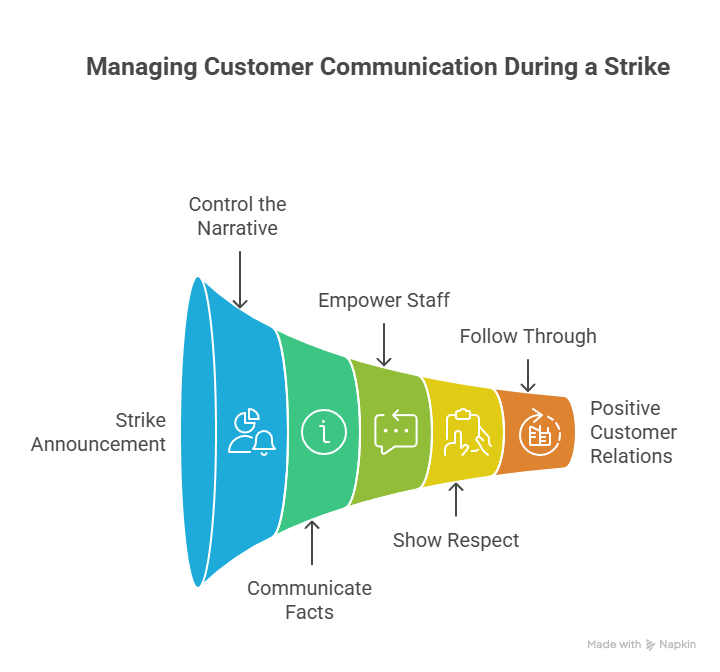
Step 1: Control the Narrative Early
Public perception fills the vacuum left by silence. The first 24 hours of a strike are critical — both for media framing and customer confidence. A pre-drafted communication plan should include:
- Immediate Press Statement: Focus on operational continuity, respect for the bargaining process, and commitment to resolution. Avoid defensive tone or assigning blame.
- Customer Email or Portal Update: Acknowledge the situation directly, outline any potential service changes, and provide a point of contact.
- Website Announcement: Keep a simple, factual update page that’s regularly refreshed to prevent speculation.
A proactive tone signals professionalism. A reactive one implies disorganization.
Step 2: Communicate Facts, Not Fears
Customers care about impact, not internal politics. Frame every update around what matters to them: delivery timelines, availability, safety, and service reliability.
Example message structure:
- What’s happening (factual, brief)
- What’s being done to mitigate disruption
- What customers can expect next
Avoid jargon like “industrial action” or “collective bargaining impasse.” Instead, use plain, respectful language that builds understanding rather than confusion.
Step 3: Empower Customer-Facing Staff
Your sales reps, account managers, and call center teams become the voice of your company during a strike. Without guidance, they risk improvising answers — which can create inconsistent messages or unintentional liability.
Equip them with:
- Internal FAQs addressing service changes and company position.
- Unified messaging templates for customer inquiries.
- Escalation protocols for sensitive issues or media contact.
The more informed your customer-facing employees are, the more consistent — and credible — your public communication becomes.
Step 4: Demonstrate Respect for Workers
Even while managing customer expectations, avoid framing the workforce as adversaries. Customers often sympathize with workers who strike, especially if the issue relates to safety or fairness. Statements that express respect for employees and acknowledgment of negotiations can help preserve brand reputation.
Step 5: Follow Through and Update Regularly
Once communication begins, it must remain consistent until the strike is resolved. Silence between updates creates anxiety and damages credibility. Regular, factual updates demonstrate that leadership remains in control and accountable.
Communicating With Unions During a Strike
The Goal: Transparency Without Concession
Union communications require precision and emotional intelligence. While negotiations occur formally through designated representatives, communication tone outside those sessions can influence progress just as much as numbers on a contract.
A company that communicates with honesty, consistency, and professionalism earns credibility — even in disagreement.
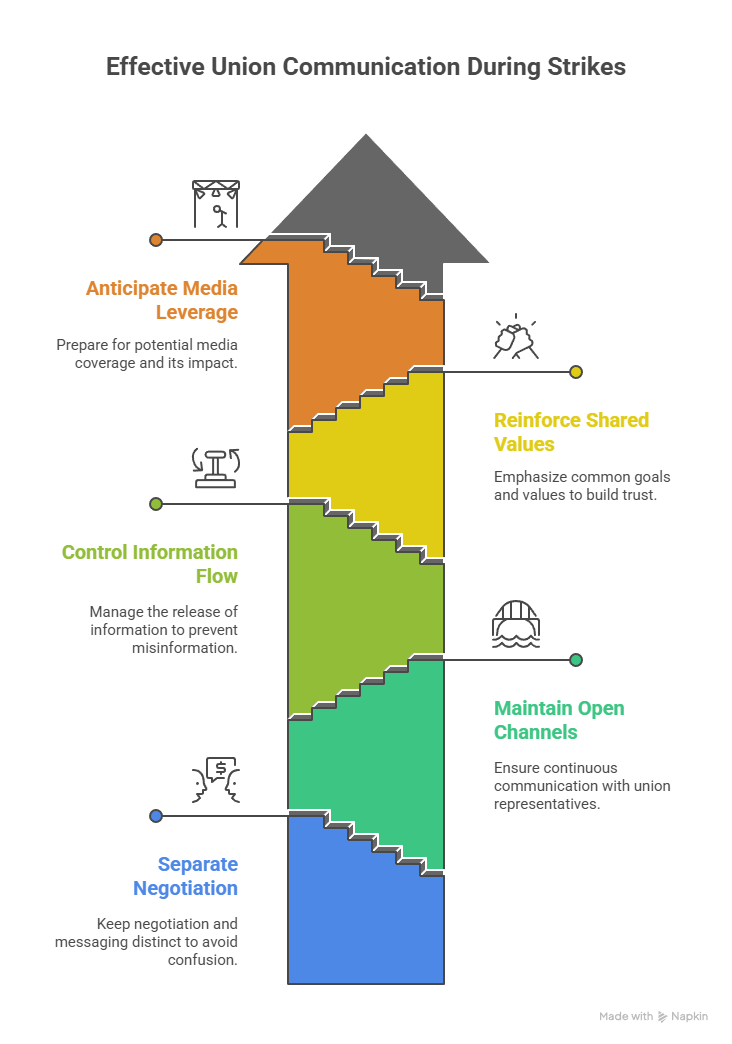
Step 1: Separate Negotiation From Messaging
Public communication should never undermine collective bargaining. Keep the negotiation table private, but maintain transparency in general communications about company values and process.
For example:
- Instead of saying, “The union rejected our fair offer,”
say, “Negotiations are ongoing as both sides work toward a fair resolution.”
This protects good-faith bargaining and minimizes the risk of antagonizing the union or its members.
Step 2: Maintain Open Channels
Union leaders are often the most direct conduit to the workforce. When management cuts off communication, rumors spread quickly among employees. Even during disputes, maintaining a respectful channel of dialogue helps de-escalate tensions.
Key actions include:
- Scheduling periodic check-ins between designated representatives.
- Documenting all communications for accuracy.
- Keeping tone professional and non-confrontational.
The goal isn’t to win an argument — it’s to sustain a relationship that can survive post-strike collaboration.
Step 3: Control Information Flow
A strike creates multiple communication vectors — management memos, union newsletters, social media, and media interviews. Misinformation can ignite hostility. To prevent this:
- Coordinate internal and external statements through one authorized voice.
- Monitor public communications to correct inaccuracies promptly.
- Train managers to avoid speculative or unauthorized comments.
Consistency breeds trust. Contradictions invite confusion and resentment.
Step 4: Reinforce Shared Values
Despite being on opposite sides of the table, management and unions often share long-term goals: safe work environments, job security, and operational sustainability. Reminding both parties of these shared interests helps keep negotiations grounded in mutual outcomes, not personal conflict.
This might sound like:
“We remain committed to a fair agreement that supports both our employees and the future strength of the company.”
A message like this neither concedes nor confronts — it communicates steadiness.
Step 5: Anticipate Media Leverage
Union statements often reach the public first. Media outlets may quote union representatives before company spokespeople respond. For this reason, it’s essential to prepare media responses ahead of time, with pre-approved language emphasizing respect, collaboration, and continuity.
If management appears combative or dismissive, it risks losing public trust. The tone should always be measured, factual, and forward-looking.
Communicating With Internal Staff
The Goal: Clarity, Calm, and Cohesion
While external audiences shape perception, internal communication determines performance. Non-striking employees, managers, and contractors must understand how operations will function, what’s expected of them, and where to find reliable information.
A poorly informed workforce can quickly descend into confusion, fear, and disengagement — precisely when stability matters most.
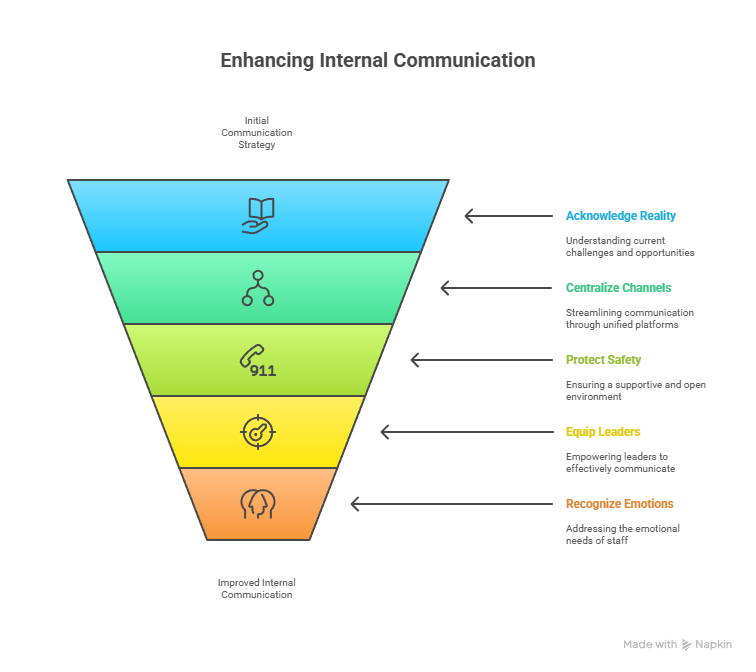
Step 1: Acknowledge the Reality
Never pretend the strike isn’t happening. Employees know when something’s wrong. Attempting to downplay or hide it damages credibility. Instead, acknowledge the event plainly and express empathy for everyone affected.
Example:
“We understand this is a difficult time for many across our organization. Our goal is to maintain stability, safety, and respect for all employees as negotiations continue.”
This sets the tone: transparent, composed, and human.
Step 2: Centralize Communication Channels
Scattered information breeds misinformation. Direct all updates to a single, trusted channel — whether an intranet page, internal newsletter, or dedicated email alias. Consistency prevents speculation and rumor escalation.
Every update should include:
- What’s changed operationally
- What remains the same
- Where to ask questions confidentially
Step 3: Protect Psychological Safety
Strikes create uncertainty about pay, job security, and workplace loyalty. Remaining employees may feel pressured or anxious about being perceived as “crossing lines.” Leadership must address this directly.
Actions that reinforce safety and professionalism include:
- Zero-tolerance policy for harassment or intimidation among staff.
- Anonymous feedback options for employees to raise concerns.
- Clear HR communication on expectations, scheduling, and compensation.
The tone should reflect calm authority — not corporate detachment.
Step 4: Equip Leaders to Communicate Downstream
Frontline supervisors and department heads often become the interpreters of policy. Without training, they may inadvertently spread mixed messages. A short leader communication toolkit helps them deliver consistent updates, including:
- Talking points and FAQs
- Email and meeting templates
- Guidance on how to answer “What does this mean for me?”
This ensures that every manager — from warehouse floor to corporate office — reinforces the same message.
Step 5: Recognize the Emotional Dimension
Beyond logistics, strikes are emotionally charged. Workers on both sides may feel betrayed, defensive, or fatigued. Communication must therefore combine empathy with clarity. Acknowledging frustration isn’t weakness — it’s credibility.
An internal memo might read:
“We know this process is stressful and affects both professional and personal lives. We appreciate the resilience of all employees and remain hopeful for a resolution that benefits everyone.”
Messages like these build loyalty and trust, even under strain.
4. Synchronizing Communications Across Stakeholders
The Goal: One Voice, Many Audiences
Each audience — customers, unions, and staff — receives messages tailored to their concerns. But the underlying narrative must remain unified. A single strategic communication framework prevents contradictions and reinforces trust.
Key alignment principles:
| Audience | Core Message | Desired Outcome |
| Customers | Service continuity and professionalism | Confidence and retention |
| Unions | Respectful dialogue and ongoing negotiation | Constructive bargaining |
| Staff | Clarity, empathy, stability | Cohesion and morale |
Consistency across these layers ensures the company speaks with one voice, even across different platforms and levels of transparency.
Coordinating Through a Central Command
During high-tension events like strikes, organizations benefit from a communication command center — a cross-functional team that unites HR, operations, PR, and legal. Its responsibilities include:
- Approving outgoing messages.
- Monitoring media and social sentiment.
- Updating key stakeholders in real time.
This structure minimizes confusion and ensures every update aligns with both operational and legal priorities.
Legal and Ethical Boundaries in Strike Communication
Staying Compliant While Staying Clear
All strike-related communication sits under the microscope of labor law. One careless sentence — especially regarding employment status, pay, or replacement staffing — can trigger legal repercussions.
To stay compliant:
- Review all communications with legal counsel before release.
- Avoid discussing bargaining positions or making threats, even indirectly.
- Never frame temporary or replacement workers as “permanent solutions.”
- Ensure messages to striking employees don’t discourage lawful union activity.
Compliance doesn’t mean silence; it means precision. Communicating within legal bounds still allows for openness, reassurance, and accountability.
Respecting Privacy and Dignity
Whether dealing with media inquiries or internal gossip, leaders should maintain professional discretion. Discussing individual employees or union representatives publicly erodes trust. Keep all communications focused on process and policy, not people.
Crisis Communication Tactics for Media and Public
The Goal: Protect Reputation While Leading With Facts
Strikes often attract public and media attention. Headlines can shape how stakeholders — and future talent — perceive your organization. Managing the public narrative requires discipline, transparency, and preparedness.
Prepare Core Messaging in Advance
Before any public announcement, leadership should prepare:
- Three key talking points (continuity, respect, resolution).
- One quote-ready statement from senior leadership.
- A press Q&A document anticipating potential questions.
This ensures quick, consistent responses when journalists call — not reactive scrambling.
Keep Media Statements Short and Sincere
Long-winded defenses sound evasive. Focus on clarity and empathy:
“Our priority is maintaining service for our customers and reaching a fair agreement with our employees. We respect their rights and continue to work toward resolution.”
This communicates composure, respect, and control — without overexposing internal dynamics.
Use Social Channels Responsibly
Social media amplifies every narrative — both accurate and false. During strikes, adopt a “calm and corrective” approach:
- Correct misinformation promptly but politely.
- Avoid debates or emotional replies.
- Keep tone factual, consistent with official statements.
A single tweet can shape perception faster than a full press release, so guard your tone and timing carefully.
Post-Strike Communication: Rebuilding Trust
The Goal: Repair, Reinforce, and Reintegrate
When the strike ends, the communication work isn’t over — it’s only shifted from crisis to recovery. The post-strike period determines whether the organization rebuilds stronger or remains fractured.
Step 1: Acknowledge the Resolution Publicly
Announce the conclusion clearly and gratefully:
“We’re pleased to share that an agreement has been reached, and operations are returning to full capacity. We appreciate the commitment of all parties involved and the patience of our customers.”
This reassures all stakeholders and signals closure.
Step 2: Restore Internal Unity
After weeks of tension, employees need reassurance that they belong to one organization again. Internal communication should:
- Thank all staff — striking and non-striking — for their professionalism.
- Reiterate shared goals and company mission.
- Announce support resources (counseling, team workshops, HR Q&A).
This humanizes leadership and helps heal divisions.
Step 3: Gather Lessons Learned
A formal post-strike communication review identifies what worked, what failed, and what to improve. Consider questions like:
- Were customer concerns adequately addressed?
- Did staff feel informed throughout?
- How effectively did union communications stay consistent with company values?
Documenting these findings builds institutional resilience for future events.
Building a Long-Term Strike Communication Framework
From Reactive to Ready
Organizations that communicate well during strikes are rarely improvising. They’ve already developed comprehensive communication frameworks that include:
- Pre-Approved Messaging Templates: For customers, staff, media, and unions.
- Crisis Command Structure: Defined roles for HR, PR, and legal.
- Regular Training: For executives and managers on communication compliance.
- Monitoring Systems: For tracking public sentiment and internal morale.
This preparation transforms crisis communication from damage control into strategic reputation management.
The Human Element of Strike Communication
Balancing Empathy and Authority
Ultimately, strike communication isn’t just about messaging — it’s about people. Behind every negotiation are human anxieties, livelihoods, and identities. Companies that communicate with empathy — without losing clarity or authority — emerge stronger both internally and externally.
Empathy doesn’t mean weakness. It means acknowledging impact while maintaining direction. A workforce that feels respected, even during disagreement, is more likely to return engaged and productive once the dust settles.
The Voice of Leadership
During disruption, employees and customers look for visible leadership. A well-timed statement or town hall from executives can restore confidence far more effectively than polished press releases. Leaders should embody three traits in every communication:
- Calm: A steady tone projects control.
- Clarity: Facts over emotion or speculation.
- Consistency: The same message across every channel and audience.
When leaders communicate this way, they don’t just manage a strike — they preserve the organization’s integrity.
Communication Is the Real Continuity Plan
Strike management isn’t just about staffing or logistics — it’s about communication. Every audience requires a distinct approach, but the mission remains the same: clarity, respect, and consistency under pressure.
Customers need assurance.
Unions need fairness.
Staff need stability.
When handled with preparation and professionalism, strike communication becomes a demonstration of leadership, not damage control. The most resilient organizations treat every message as an opportunity to strengthen trust — proving that even in conflict, credibility never has to go on strike.