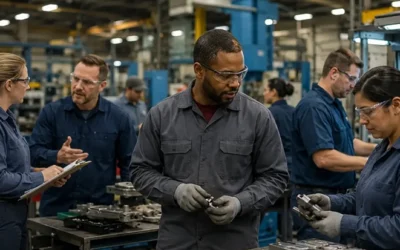


Manufacturing relies on consistent output, predictable workflows, and reliable labor capacity. Facilities face fluctuating demand cycles, equipment variability, and uneven labor market conditions, all of which place pressure on staffing stability. Workforce strategy functions as a core operational discipline rather than a support function, influencing throughput, quality control, safety, and cost management.
Organizations use manufacturing staffing to maintain continuity when workloads shift, teams expand, or specialized skills are required. The approach strengthens resilience by ensuring the right labor is available at the right time, supporting consistent line performance across production, warehousing, logistics, and maintenance environments. A well-structured staffing model aligns labor supply with operational requirements instead of forcing production schedules to adapt to staffing limitations.
Why Manufacturers Depend on External Labor Partnerships
Manufacturing demands a mix of predictable labor for ongoing production and variable labor for peak seasons, special projects, and new product introductions. Relying solely on direct hiring restricts a company’s ability to respond quickly to these shifts. Staffing partners reduce this friction by providing rapid access to vetted workers who can be deployed without extended onboarding cycles.
This structure benefits facilities with complex workforce needs. Teams can adjust labor volume to match order volume, maintain quality targets during rapid scale-ups, and prevent overtime strain that raises risk and erodes margins. Manufacturing staffing also minimizes disruptions caused by absenteeism, turnover, or extended recruitment timelines that slow critical production lines.
How Manufacturing Staffing Strengthens Industrial Operations
Staffing strategy contributes directly to productivity, safety, and output reliability. Facilities with well-supported labor models experience fewer production delays and maintain more stable cycle times, even during peak periods. Strong staffing also supports equipment uptime by ensuring skilled labor is available for troubleshooting, setup, and maintenance functions.
The value extends beyond filling open positions. High-quality manufacturing staffing improves shift coverage, supports cross-training efforts, and strengthens workforce planning. When demand volatility rises, the staffing approach becomes a buffer that protects production targets and prevents supply chain disruptions.
Key operational benefits include:
- Faster workforce scalability during surges or new production launches.
- Stabilized throughput when internal hiring pipelines are strained.
- Reduced downtime through reliable access to skilled trades and line operators.
- Improved safety through labor matching aligned with task complexity.
- Lower turnover by placing individuals suited to industrial environments.
When applied correctly, staffing becomes a component of operational design rather than a reactive measure.
The Talent Landscape Across Modern Manufacturing
Labor markets in manufacturing experience structural shortages driven by retirements, evolving skill demands, and competition from other industrial sectors. Roles requiring precision, mechanical aptitude, quality inspection capability, or adherence to strict safety protocols can be difficult to fill through direct hiring alone. Staffing partners mitigate this gap by maintaining ongoing recruitment pipelines across multiple industrial categories.
The manufacturing workforce includes both entry-level and skilled positions that support production, assembly, machine operation, shipping, quality, and facilities maintenance. These positions require different candidate pools, screening processes, and readiness expectations. Manufacturing recruitment agencies specialize in sourcing individuals with the physical aptitude, technical familiarity, or trade background necessary to operate safely and efficiently in industrial environments.
This continuous pipeline benefits companies with multiple shift cycles or those operating in regions where skilled labor competition is high. By maintaining access to workers who understand production environments, organizations shorten the time from onboarding to full productivity.
Manufacturing Staffing for High-Volume and Fast-Paced Operations
High-volume operations rely on consistent staffing because even small gaps create ripple effects across the production chain. Equipment cannot run at designed capacity without the correct number of operators, material handlers, or quality personnel. Understaffing slows output, increases the risk of errors, and pushes production teams into overtime cycles that reduce accuracy and morale.
Manufacturing temp agencies provide scalable labor solutions for these environments. Workers can be assigned to meet seasonal demand, respond to short-notice shifts, or help launch new product lines. In many cases, temporary labor becomes an operational lever that enables manufacturers to plan aggressively without exposing the organization to long-term workforce risk.
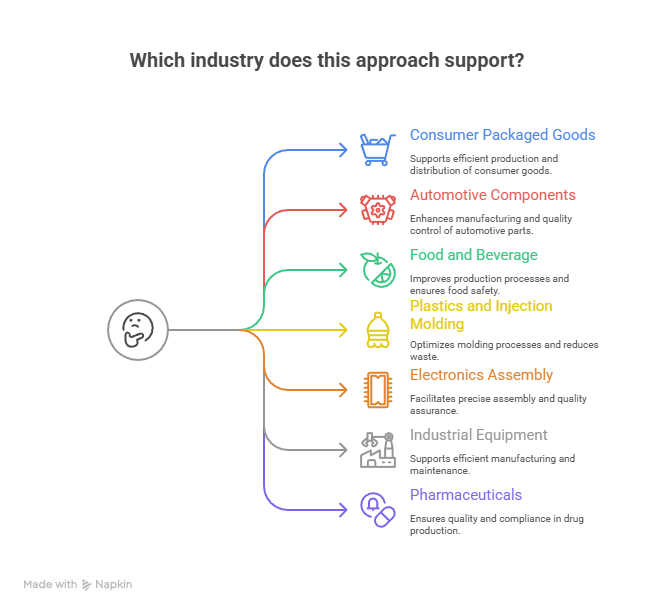
This approach supports industries such as:
- Consumer packaged goods
- Automotive components
- Food and beverage production
- Plastics and injection molding
- Electronics assembly
- Industrial equipment manufacturing
- Pharmaceuticals and medical device production
Each of these sectors experiences cycles that require quick access to labor without compromising safety or quality.
The Function of Industrial Recruitment in Specialized Skilled Roles
While temporary labor supports general production needs, many manufacturers require specialized skills for machine operation, maintenance, or quality control. These roles demand deeper screening and longer technical evaluation during the hiring process. Manufacturing recruitment agencies provide this capability by maintaining networks of machinists, technicians, maintenance professionals, and line leads capable of working with complex systems.
These positions often include:
- CNC machinists
- Maintenance technicians
- Industrial electricians
- Mechanical assemblers
- Quality inspectors
- Tool and die specialists
- Production supervisors
Strong recruitment pipelines enable manufacturers to fill critical positions without prolonged vacancies. A delay in hiring a skilled role can halt production, extend setup times, or inhibit the launch of new equipment. Staffing partners sourcing for specialized roles contribute to production continuity by shortening the hiring cycle and ensuring technical competency.
Workforce Agility as a Competitive Advantage in Manufacturing
Facilities that operate with flexible labor structures respond more effectively to supply chain changes, demand swings, and operational constraints. Workforce agility becomes a competitive differentiator when lead times compress or when customer expectations shift rapidly. Organizations with access to scalable labor adjust output faster and manage production bottlenecks with greater control.
Workforce agility supports:
- Faster changeovers
- Increased line flexibility
- Enhanced ability to run simultaneous projects
- Better absorption of surge orders
- Improved customer service levels
In competitive manufacturing markets, the ability to produce consistently and respond quickly is often more valuable than static cost efficiency. Staffing strategy gives facilities a lever to maintain responsiveness without compromising long-term labor structure.
How Manufacturing Staffing Integrates With Lean and Continuous Improvement
Lean manufacturing and continuous improvement frameworks rely on stable workflows, predictable cycle times, and standardized processes. Staffing instability undermines these structures by introducing variability that affects takt time, throughput, and quality.
Manufacturing staffing reduces variability by placing workers who understand industrial processes and can perform within established standards. When labor teams are consistent and well-matched to the environment, lean initiatives move more efficiently from planning to execution. This alignment also supports structured training, standardized work documentation, and incremental efficiency gains.
In environments pursuing continuous improvement, staffing becomes part of the workflow itself. Reliable labor allows teams to identify bottlenecks more accurately, test improvement ideas with greater consistency, and maintain optimized processes over longer periods.
Preparing for Operational Risk Through Resilient Labor Models
Manufacturers face risk from demand volatility, equipment issues, supply chain delays, and workforce shortages. Staffing strategy mitigates these risks by ensuring coverage for critical roles, reducing dependency on overtime, and maintaining operational readiness even when internal hiring efforts experience delays.
Resilient labor models support multiple forms of risk management:
- Absenteeism and turnover coverage, ensuring uninterrupted production.
- Shift stabilization, preventing uneven output across day, night, and weekend cycles.
- Specialized support, such as maintenance staffing during shutdowns or upgrades.
- Contingency preparedness when market or labor disruptions occur.
A robust staffing model is part of a broader resilience strategy that keeps production lines active during periods of uncertainty.
The Role of Screening, Safety Alignment, and Worker Readiness
Manufacturing environments require workers who can follow safety protocols, maintain situational awareness, and operate equipment or tools correctly. Manufacturing recruitment agencies screen candidates based on safety mindset, physical capability, prior industrial experience, and role-specific aptitude.
Readiness includes:
- Understanding shift expectations
- Demonstrating reliability and punctuality
- Following lockout/tagout rules when applicable
- Maintaining proper PPE usage
- Working effectively within team-based production systems
When workers arrive prepared for industrial environments, facilities experience fewer incidents, faster onboarding cycles, and more consistent productivity.
How Manufacturing Temp Agencies Support Peak Season Readiness
Seasonal production cycles create concentrated labor demand that exceeds the capacity of full-time teams. Holidays, agricultural cycles, consumer spending surges, and inventory build periods often compress deadlines into tight windows. Temporary staffing absorbs this pressure by supplying workers precisely when demand accelerates, eliminating the need for long-term hiring commitments.
Peak season readiness depends on rapid scaling, reliable attendance, and consistent performance under time-sensitive conditions. Manufacturing temp agencies maintain pools of workers accustomed to varied assignments, shift changes, and fast-paced operating environments. This creates a stable labor foundation that allows production leaders to plan confidently without relying on unpredictable overtime strategies.
Facilities benefit through:
- Rapid onboarding
- Flexible scheduling
- Calibrated skill matching
- Reduced strain on full-time teams
- Stronger alignment with delivery deadlines
This structure supports manufacturers handling high order volumes or fulfilling large distribution requirements during peak periods.

Integration With Production Planning and Scheduling Teams
Workforce allocation influences production planning accuracy. If labor coverage is inconsistent, schedules lose reliability and forecast accuracy declines. Integrating manufacturing staffing into planning processes improves both short-term planning and long-range capacity models.
Schedulers can more confidently assign labor to:
- New product launches
- Seasonal spikes
- Large customer orders
- Weekend or overnight operations
- Maintenance shutdowns
By synchronizing workforce availability with production requirements, manufacturers increase control over cycle times and avoid the variability that disrupts material flow, quality checks, and shipping deadlines.
Manufacturing Staffing as a Lever for Quality Assurance
Quality assurance relies on precision, consistency, and adherence to standardized processes. Staffing gaps create conditions where workers take shortcuts or assignments shift unexpectedly, increasing the likelihood of errors. A stable labor model reduces these risks by matching workers to tasks they can execute reliably.
Manufacturing recruitment agencies support quality initiatives by providing workers with the aptitude and training necessary for inspection tasks, controlled-environment work, or roles requiring repetitive accuracy. When quality control has a reliable workforce, defect rates drop, rework declines, and customer satisfaction remains stable.
Strong staffing practices also allow quality teams to:
- Maintain consistent checkpoints
- Ensure material traceability
- Support compliance
- Reduce unplanned downtime from error correction
When labor stability increases, quality performance follows.
Supporting Safety Culture Through Consistent Staffing
Safety programs require sustained reinforcement. Frequent turnover or inconsistent coverage weakens safety culture and increases incident risk. Manufacturing staffing supports safety goals by reducing labor instability and ensuring workers receive proper orientation, PPE guidance, and procedural training.
Workers familiar with industrial environments understand the importance of:
- Machine guarding
- Hazard communication
- Clean work areas
- Safe material handling
- Reporting protocols
Agencies specializing in manufacturing roles screen for candidates who demonstrate awareness of these principles. As teams become more stable, safety leaders gain the consistency needed to reinforce training programs and monitor adherence more effectively.
Reducing Overtime Dependency With Scalable Labor
Excessive overtime contributes to fatigue, errors, and equipment strain. Overtime-driven staffing models place stress on full-time workers and can create avoidable downtime. Manufacturing staffing reduces this dependency by supplementing teams during high-volume periods, allowing companies to manage workloads without exceeding safe or cost-effective thresholds.
With additional labor capacity, manufacturers can:
- Maintain steady production velocity
- Prevent overtime burnout
- Protect quality and safety performance
- Extend equipment lifespan
- Control labor costs more predictably
Scaling staffing appropriately leads to more balanced operations and more reliable long-term performance.
How Manufacturing Staffing Supports Multi-Site Operations
Organizations operating across multiple plants, warehouses, or production facilities need staffing consistency to maintain standards across locations. Staffing partners help support multi-site operations by providing labor that aligns with standardized policies, job descriptions, and expectations.
This improves cross-site performance through:
- Uniform training and onboarding workflows
- Predictable labor performance across facilities
- Easier deployment of temporary or traveling labor teams
- Better control over staffing-related KPIs
Multi-site staffing strategies also help organizations centralize workforce planning and manage labor supply with greater accuracy, reducing uncertainty in regions where industrial labor is highly competitive.
Adapting Staffing Models to Automation and Technological Change
Automation and advanced manufacturing technologies reshape labor requirements rather than eliminate them. As equipment becomes more sophisticated, the demand for skilled technicians, operators, and quality personnel increases. Staffing strategies adapt to these changes by evolving recruitment pipelines and screening processes to match emerging needs.
Modern manufacturing workforce requirements include:
- Machine interface operation
- Basic programming literacy
- Preventive maintenance understanding
- Data monitoring and production analytics
- Rapid troubleshooting capability
By sourcing workers who can operate effectively alongside automation, staffing partners support digital transformation and help manufacturers keep pace with evolving production technologies.
Building a Sustainable Labor Pipeline Through Ongoing Recruitment
Manufacturers with strong labor pipelines experience fewer disruptions during hiring cycles. Recruitment agencies maintain these pipelines by consistently advertising roles, screening workers, and staying engaged with local labor markets, even when client demand fluctuates.
This continuous process ensures:
- Shorter hiring timelines
- Steady candidate flow during peak seasons
- Better matching between worker skills and job requirements
- More predictable workforce availability
A sustainable labor pipeline also reduces the impact of sudden demand shifts or turnover spikes, stabilizing operations during uncertain periods.
The Role of Workforce Data in Manufacturing Staffing Strategy
Data-driven staffing strengthens manufacturing operations by identifying patterns in attendance, shift performance, turnover, and productivity. Recruitment partners track workforce data to improve placements, align workers with suitable roles, and anticipate operational needs more accurately.
Manufacturers benefit when staffing decisions incorporate:
- Skill distribution analytics
- Absenteeism patterns
- Shift-specific productivity trends
- Worker tenure and retention indicators
- Regional labor availability
Using workforce data supports proactive planning and enhances decision-making at both the plant and corporate level.
How Staffing Supports New Facility Launches and Production Expansions
Launching a new facility or expanding production capacity requires large-scale hiring within tight timelines. Manufacturing staffing provides the labor volume needed to accelerate these initiatives while maintaining consistency during ramp-up.
Support typically includes:
- High-volume recruitment
- Onsite workforce management
- Staggered onboarding cycles
- Role-specific placement
- Continuous attendance monitoring
This approach allows new facilities to reach full capacity faster and with fewer disruptions, reducing risk during the most critical phase of production expansion.
The Strategic Advantage of Partnering With Experienced Manufacturing Staffing Firms
Experienced manufacturing staffing partners understand the operational realities of industrial environments, enabling them to match candidates not only based on skills but also based on the pace, safety requirements, and physical demands of the job. This level of alignment leads to stronger workforce stability and lower turnover.
Strategic advantages include:
- Faster fill times
- Higher worker reliability
- Improved safety alignment
- Enhanced ability to scale during demand spikes
- Reduced HR burden on internal teams
As manufacturing becomes more complex and labor markets remain competitive, experienced staffing support becomes a core component of operational strategy rather than a reactive measure.
FAQ’s
What does manufacturing staffing include?
It includes sourcing, screening, and placing workers in production, assembly, logistics, maintenance, and quality roles to support consistent manufacturing operations.
How do manufacturing recruitment agencies differ from temp agencies?
Recruitment agencies focus on higher-skill or long-term industrial roles, while temp agencies supply flexible labor for seasonal, high-volume, or short-term needs.
Why is staffing important for manufacturing productivity?
Stable staffing reduces downtime, supports quality control, prevents overtime strain, and ensures production lines remain fully staffed across all shifts.
How does staffing improve manufacturing safety?
Consistent labor reduces turnover, strengthens safety culture, and ensures workers understand industrial protocols, PPE requirements, and hazard controls.
What roles are most commonly filled through manufacturing staffing?
Common roles include assemblers, machine operators, forklift drivers, material handlers, maintenance technicians, and quality inspectors.
How do manufacturing staffing partners support peak demand?
They supply temporary workers to meet seasonal surges, large orders, new product launches, or unexpected volume increases.
Can staffing support new facility launches?
Yes. Staffing partners provide high-volume hiring, onsite workforce coordination, and phased onboarding to help new facilities reach full capacity quickly.
What makes manufacturing staffing different from general labor staffing?
Manufacturing requires strict safety alignment, technical aptitude, and familiarity with production environments, which impact screening and placement criteria.