
A complete guide for employers on how strike staffing and strike security protect operations, safety, and business continuity during labor disruptions, lockouts, and work stoppages.
Key Takeaways
- Strike staffing and strike security are coordinated workforce continuity services.
- Hiring during a strike begins with operational planning, not recruiting.
- Strike staffing is a specialized form of contingency labor.
- Strike security protects people, property, and operational access.
- Legal review is required before hiring replacement workers.
- Essential role mapping identifies which positions must be covered.
- Replacement worker onboarding must be fast without lowering safety.
- Staffing and security logistics must operate as one coordinated system.
- Security should de-escalate rather than intensify conditions.
- Communication failures create many strike staffing problems.
- Provider evaluation should focus on readiness, compliance, and logistics.
- Common mistakes come from rushed decisions and incomplete planning.
- A controlled hiring sequence moves from assessment to deployment.
- Reputation is shaped by how the employer behaves during disruption.
- Broader continuity planning integrates staffing, security, and operations.
- Edge cases often determine whether the plan succeeds under pressure.
- Frequently asked questions address common employer considerations.
Strike Staffing & Strike Security: A Guide for Employers
Strike Staffing and Strike Security Help Employers Maintain Operations During Labor Disruptions
Strike staffing and strike security are coordinated workforce continuity services that help employers operate safely when a strike, lockout, or labor disruption affects normal staffing levels.
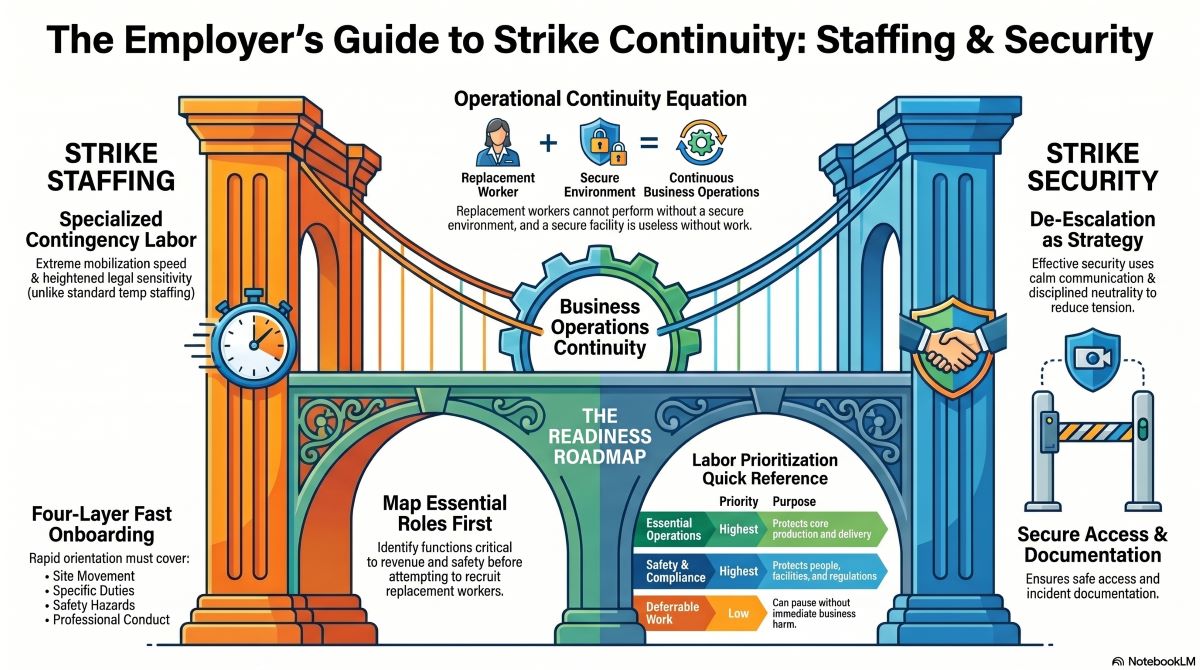
The staffing side addresses replacement labor, shift coverage, onboarding, credential verification, scheduling, and role continuity. The security side addresses access control, site protection, traffic flow, worker movement, visitor management, incident response, and de-escalation. Employers need both functions because a replacement workforce cannot perform reliably without a secure operating environment, and a secure facility has limited value if essential work cannot continue.
Hiring during a strike is different from ordinary recruiting. A standard hiring process focuses on long-term fit, compensation alignment, and role development. Strike staffing focuses on immediate operational continuity under compressed timelines, heightened scrutiny, and elevated workplace tension. The employer must identify essential functions, determine which roles can be temporarily staffed, preserve safety standards, and coordinate site access before staffing gaps become operational failures.
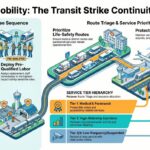
Shift coverage & scheduling
Credential verification
Onboarding & role continuity
Supervision support
Perimeter & traffic flow
Worker escorts
Incident documentation
De-escalation
Figure 1: Strike staffing and strike security operate as two pillars of one continuity system.
A strike response plan normally involves several connected decisions:
- Which functions must remain active
- Which positions require licenses, certifications, or specialized training
- How replacement workers will be sourced and onboarded
- How entrances, exits, and parking areas will be controlled
- How supervisors will document incidents, attendance, and work performance
- How the organization will communicate with customers, vendors, and employees
The strongest plans are built before a work stoppage begins. Once a strike starts, every delay becomes more expensive, every unclear role becomes harder to manage, and every unplanned entry point becomes a potential safety issue.
See also: workforce continuity planning.
Hiring During a Strike Requires Operational Planning Before Recruiting Begins
Hiring during a strike begins with defining essential work, not posting openings or contacting available workers.
The employer must first determine which activities are necessary to protect revenue, public obligations, customer commitments, equipment, inventory, regulatory compliance, and long-term business continuity. Some positions may be important under normal conditions but not critical during a strike. Other positions may appear secondary but become essential because they support safety, sanitation, dispatch, maintenance, loading, security, or supervisory coverage.
A practical strike staffing assessment separates work into three categories:
Employers should avoid treating every vacant role as equally urgent. Strike staffing succeeds when the labor plan protects the most consequential functions first. A manufacturer may prioritize machine operators, mechanics, sanitation workers, and shipping personnel. A healthcare support provider may prioritize credentialed clinical support, environmental services, and secure access routes. A logistics company may prioritize drivers, dispatchers, warehouse workers, and yard control.
Understaffed supervision can turn an otherwise qualified replacement workforce into a disorganized operating risk.
Strike Staffing Is Not Ordinary Temporary Labor
Strike staffing is a specialized form of contingency labor designed for active or potential labor disruptions.
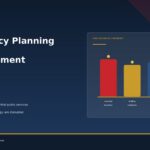
Temporary staffing usually fills predictable gaps such as seasonal demand, absences, turnover, or project-based needs. Strike staffing addresses a more complex environment involving compressed mobilization, possible picket activity, changing attendance patterns, heightened legal sensitivity, and pressure to maintain continuity without inflaming the dispute.
Figure 2: Strike staffing demands more across every operational dimension than standard temporary staffing.
A strike staffing provider may support:
- Rapid worker recruitment and deployment
- Replacement worker screening and documentation
- Role-based assignment planning
- Shift scheduling and attendance tracking
- Transportation, lodging, and meal coordination
- On-site workforce supervision support
- Contingency scaling if the strike expands
The employer should evaluate whether replacement workers can perform the required duties safely and consistently. For lower-complexity roles, a shorter onboarding process may be sufficient. For skilled trades, equipment operation, healthcare support, industrial maintenance, transportation, or regulated environments, credentialing and role validation become central to the staffing plan.
Strike staffing also requires realistic productivity assumptions. Replacement workers may be capable and experienced, but many will be unfamiliar with the facility layout, internal systems, equipment condition, reporting culture, and informal workflows. Employers should build schedules around stable coverage rather than perfect efficiency during the first phase of deployment.
Strike Security Protects Access, Safety, and Business Continuity
Strike security protects people, property, and operational access during a labor dispute.
The purpose of strike security is not intimidation. The purpose is controlled movement, lawful access, incident prevention, de-escalation, and documentation. Effective strike security keeps entrances functional, separates work activity from confrontation, protects employees and replacement workers, and reduces the chance that minor incidents escalate into serious disruptions.
A strong strike security plan usually covers:
- Entry and exit control
- Picket line observation
- Parking and perimeter monitoring
- Visitor and vendor screening
- Replacement worker escort procedures
- Delivery access and traffic coordination
- Incident documentation and evidence preservation
- Emergency response coordination
Security teams should understand the difference between presence and provocation. A poorly managed security posture can create unnecessary tension.
An effective security posture is visible enough to deter unsafe conduct, disciplined enough to avoid escalation, and organized enough to support lawful business activity.
The security plan should also address non-physical risks. Labor disruptions can trigger social media attention, customer concern, misinformation, vendor hesitation, and internal confusion. Security personnel, supervisors, and leadership should know what to document, what to report, and what not to say. Consistent communication prevents conflicting accounts from becoming operational distractions.
Employers Need a Clear Legal Framework Before Hiring Replacement Workers
Employers need legal review before hiring replacement workers because strike rights, reinstatement obligations, and replacement labor decisions can carry significant consequences.
The legality of hiring during a strike depends on the nature of the labor dispute, applicable labor law, contract language, bargaining obligations, jurisdiction, and the employer’s conduct before and during the strike. Employers should not rely on general assumptions about replacement workers. A lawful strategy in one labor context may create risk in another.
A practical legal review should examine:
- Whether the strike is economic, unfair labor practice-related, or otherwise protected
- Whether replacement workers may be temporary or permanent
- Whether returning strikers have reinstatement rights
- Whether the collective bargaining agreement limits certain actions
- Whether supervisors understand communication restrictions
- Whether security procedures respect lawful picketing activity
- Whether documentation supports legitimate business reasons for staffing decisions
Employers should also avoid statements that suggest retaliation, punishment, or hostility toward protected activity. Even when the organization has a right to continue operations, careless language can create unnecessary legal exposure. Managers should be trained on approved talking points, escalation channels, and documentation standards before employees walk out or replacement workers arrive.
The safest operational posture is disciplined neutrality. The employer can protect operations and facilities while maintaining consistent, lawful, and professional communication.
The Best Strike Hiring Plans Start With Essential Role Mapping
Essential role mapping identifies which positions, skills, and shifts must be covered for the business to keep functioning.
This process should be more specific than a department-level headcount estimate. A department may contain both critical and deferrable work. A job title may include tasks that only certain employees know how to perform. A shift may depend on one credentialed worker, one equipment operator, or one supervisor with access to a key system.
Role mapping should also identify single points of failure. A facility may depend on one maintenance technician who understands a production line, one dispatcher who knows customer routing, or one administrative employee who handles regulatory reporting. Strike staffing plans need contingencies for these hidden dependencies.
Employers should document task instructions before disruption begins. Standard operating procedures, safety steps, equipment checklists, emergency contacts, and escalation paths reduce confusion when replacement workers or temporary supervisors enter the work environment.
Replacement Workers Need Fast Onboarding Without Lowering Safety Standards
Replacement workers need accelerated onboarding that prioritizes safety, task clarity, and site-specific rules.
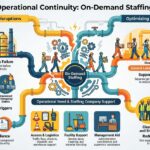
Compressed timelines do not justify incomplete orientation. Strike staffing often moves quickly, but speed must not eliminate basic controls. Workers should understand the job assignment, reporting structure, emergency procedures, security requirements, restricted areas, timekeeping expectations, and prohibited conduct before starting work.
Figure 3: The four-layer onboarding sequence for replacement workers.
Site Orientation Establishes Safe Movement
Site orientation explains where workers should enter, park, report, eat, exit, and seek help. During a strike, site movement matters more than usual. Replacement workers may be unfamiliar with picket areas, controlled gates, visitor procedures, and restricted zones. Clear movement instructions reduce confusion at entry points and help security teams maintain order.
Role Orientation Establishes Work Expectations
Role orientation explains the actual job duties, quality standards, tools, equipment, and reporting requirements. Employers should avoid vague assignment language. A worker who is told to “help in the warehouse” may not know whether to load trucks, scan inventory, operate equipment, stage materials, or clean work areas. Specific task assignment reduces mistakes and helps supervisors measure performance.
Safety Orientation Establishes Non-Negotiable Controls
Safety orientation explains hazards, personal protective equipment, emergency procedures, and stop-work authority. Replacement workers must know how to report unsafe conditions and when to stop work. Employers should not assume experienced workers automatically understand site-specific hazards. Industrial equipment, chemicals, loading docks, patient areas, high-traffic yards, and secured facilities each require tailored safety instruction.
Conduct Orientation Establishes Professional Boundaries
Conduct orientation explains how workers should behave around picket lines, striking employees, media, visitors, and customers. Replacement workers should avoid arguments, gestures, filming, taunting, or direct confrontation. Professional restraint protects the worker, the employer, and the stability of the operation.
Strike Security and Staffing Logistics Must Be Planned Together
Strike security and staffing logistics must operate as one coordinated system.
A staffing plan can fail if replacement workers cannot reach the facility safely, park efficiently, enter without confusion, or access meals and rest areas during long shifts. A security plan can fail if security personnel do not know when workers are arriving, which entrances will be used, or which vendors require access.
Important logistics include:
- Worker arrival windows
- Shuttle or transportation routes
- Hotel and lodging coordination
- Meal delivery or cafeteria access
- Badge or credential distribution
- Shift change procedures
- Emergency medical access
- Vendor and delivery routing
Transportation planning is especially important when facilities have limited entrances, public-facing picket activity, or large shift changes. Staggered arrival times may reduce congestion. Designated drop-off points may limit worker exposure to confrontation. Clear instructions may prevent replacement workers from accidentally approaching the wrong gate.
Employers should also prepare for fatigue management. Strikes often create extended schedules, overtime reliance, and emotionally charged working conditions. Lodging, meal planning, and reasonable rest periods support safer performance and lower turnover among replacement workers.
Employers Should Use Security to De-Escalate, Not Intensify, Strike Conditions
Strike security should reduce conflict rather than increase visible pressure.
The most effective strike security teams understand labor dispute environments. Security personnel should be trained to observe, document, direct traffic, protect access, and respond proportionately. Aggressive posture, unclear authority, or unnecessary physical proximity can intensify tension and create avoidable incidents.
A de-escalation-centered security model includes:
- Calm verbal communication
- Consistent access procedures
- Clear perimeter boundaries
- Non-confrontational observation
- Prompt incident reporting
- Coordination with management and law enforcement when needed
- Strict limits on unauthorized engagement
Employers should define what security personnel may and may not do. Security teams should not negotiate labor issues, debate picketers, make employment-related statements, or act outside the approved security plan. Their role is safety and access control, not labor relations messaging.
Documentation is part of de-escalation. Accurate incident logs, time-stamped reports, photos where appropriate, and witness notes help the organization respond based on facts rather than emotion. Good documentation also helps leadership identify patterns, adjust gate procedures, and determine when additional support is needed.
Related concept: workplace violence prevention.
Communication Failures Create Many Strike Staffing Problems
Communication failures can disrupt strike staffing even when replacement labor and security resources are available.
Employers often focus on hiring and protection while underestimating the number of stakeholders who need accurate information. Customers may need continuity updates. Vendors may need delivery instructions. Supervisors may need scripts. Replacement workers may need daily reporting details. Non-striking employees may need reassurance about access, safety, and expectations.
A strike communication plan should identify:
Internal messaging should be consistent and concise. Managers should avoid speculation about bargaining, employee motives, or strike duration. Operational updates should focus on schedule, safety, access, and service continuity.
External messaging should be careful and factual. Customers and vendors usually do not need detailed labor commentary. Most need to know whether service continues, whether delivery processes have changed, and whom to contact for urgent issues.
A Strike Staffing Provider Should Be Evaluated on Readiness, Compliance, and Logistics
A strike staffing provider should be selected based on mobilization capability, labor quality, compliance discipline, and logistical support.
Cost matters, but the lowest-cost provider may create greater risk if workers arrive unprepared, schedules collapse, credentials are incomplete, or communication is weak. Employers should evaluate providers based on their ability to function under pressure, not only their hourly rates.
Key evaluation criteria include:
- Experience with labor disruption staffing
- Ability to recruit qualified workers quickly
- Screening and credential verification processes
- National or regional deployment capacity
- Transportation and lodging coordination
- On-site management support
- Safety orientation procedures
- Documentation and reporting capabilities
- Scalability if the strike expands or extends
Employers should ask how the provider handles no-shows, worker replacement, incident escalation, role matching, and shift continuity. A provider that can explain these details clearly is more likely to perform under real conditions.
The provider should also understand the employer’s industry. Staffing a food processing facility, warehouse, hospital support function, manufacturing plant, school transportation operation, or utility contractor requires different risk controls. General labor availability is not the same as operational fit.
Strike Security Providers Must Understand Labor Dispute Environments
Strike security providers must be able to protect access without mishandling lawful labor activity. General security experience is not always enough. Labor disputes involve heightened emotions, public visibility, legal sensitivity, and fluid movement around entrances, sidewalks, parking areas, and delivery routes. A provider that treats a strike like a routine guard assignment may miss important risks.
Employers should evaluate strike security providers based on:
- Labor dispute experience
- De-escalation training
- Incident documentation standards
- Gate and perimeter planning capability
- Coordination with local law enforcement
- Ability to support worker escorts and traffic control
- Understanding of lawful picketing boundaries
- Professional appearance and conduct standards
Security staffing levels should match the site risk profile. A small office with limited public access may require a lighter presence. A large industrial operation with multiple gates, truck traffic, and round-the-clock shifts may require a more robust plan. The plan should adapt as conditions change rather than remain fixed after day one.
The employer should also establish a single command structure. Security personnel, site leadership, legal counsel, human resources, and operations managers need defined escalation paths. Conflicting instructions during a strike can create confusion at the exact moment clarity matters most.
Employers Must Avoid Common Mistakes When Hiring During a Strike
The most common strike hiring mistakes come from rushed decisions, unclear authority, and incomplete planning.
A labor disruption compresses decision-making. Employers may feel pressure to hire quickly, increase security quickly, and communicate quickly. Speed is necessary, but unmanaged speed can create avoidable exposure.
Common mistakes include:
- Waiting until the strike begins to identify essential roles
- Hiring workers without confirming required skills or credentials
- Underestimating transportation, lodging, and meal logistics
- Assigning replacement workers without site-specific safety training
- Using supervisors who are not trained on strike communication rules
- Creating inconsistent access procedures across different gates
- Failing to document incidents, attendance, and staffing decisions
- Treating security as a visual deterrent rather than an operating function
Another frequent mistake is overstaffing the wrong functions. Employers may bring in a large number of workers without enough supervisors, tools, equipment access, or task clarity. A smaller, better-directed workforce often performs more reliably than a larger group without structure.
Employers should also avoid assuming the first day determines the entire strike. Workforce needs may change as operations stabilize, employee attendance shifts, vendors adjust, and customer demand changes. Strike staffing should be actively managed, not simply deployed.
A Practical Hiring Process During a Strike Should Follow a Controlled Sequence
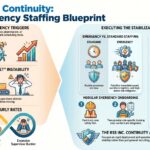
A controlled strike hiring process moves from operational assessment to workforce deployment in a disciplined sequence.
The sequence should prevent the employer from hiring workers before understanding the work, bringing workers on site before securing access, or assigning tasks before supervisors are prepared.
Figure 4: The eight-step controlled hiring sequence for strike response. Steps may be compressed under time pressure but should not be skipped.
This sequence can be compressed when time is limited, but the steps should not be skipped. The employer still needs legal review, role clarity, access planning, safety orientation, and documentation.
Daily review is especially important. Strike conditions can change quickly. A gate that functioned well on Monday may become congested on Tuesday. A role that seemed adequately covered may need additional skill depth. A vendor route may need adjustment. Strike staffing is an active operating model, not a one-time staffing order.
Strike Staffing Decisions Should Account for Reputation and Customer Confidence
Strike staffing decisions affect more than internal operations.
Customers, vendors, community members, and employees may form opinions based on how the employer behaves during a labor disruption. The organization should maintain professionalism, avoid inflammatory language, and demonstrate that continuity measures are grounded in safety, service obligations, and operational responsibility.
Reputation risk often increases when employers appear unprepared. Missed deliveries, facility confusion, visible confrontation, inconsistent messaging, and abrupt service failures can damage confidence. A controlled plan signals stability even when labor conditions are unsettled.
Customer-facing continuity should include:
- Clear account contact points
- Realistic service timelines
- Updated delivery or access procedures
- Internal escalation for high-priority customers
- Consistent messaging across sales, operations, and support teams
Employers should avoid overpromising. Strike staffing can preserve operations, but productivity may fluctuate during the transition. Customers are more likely to remain confident when updates are accurate, measured, and aligned with actual capacity.
The same principle applies internally. Non-striking employees, supervisors, and replacement workers need to see that leadership is organized. Clear schedules, secure entrances, defined reporting channels, and professional communication reduce uncertainty.
Strike Staffing and Strike Security Work Best as Part of a Broader Continuity Plan
Strike staffing and strike security are most effective when integrated into a full business continuity plan.
A labor disruption can affect production, service delivery, transportation, vendor relationships, inventory, maintenance, customer support, payroll, technology access, and facility safety. Replacement labor and security coverage address major needs, but they do not replace broader operational planning.
Employers should test the plan before a strike occurs. Even a tabletop exercise can reveal overlooked details such as badge access, gate capacity, backup supervisors, vendor instructions, parking overflow, or missing task documentation.
The plan should also include demobilization. When the strike ends, the employer may need to transition work back to returning employees, adjust replacement worker assignments, close out security operations, preserve documentation, and review lessons learned.
See also: business continuity planning.
Employers Should Prepare for Edge Cases That Disrupt Standard Strike Plans
Edge cases can determine whether a strike staffing plan succeeds under pressure.
A standard plan may assume predictable worker arrivals, stable picket activity, clear replacement roles, and manageable customer demand. Real labor disruptions can become more complicated. Employers should prepare for scenarios that strain the plan.
Important edge cases include:
- A strike begins earlier than expected.
- A small disruption expands across multiple locations.
- Replacement workers cancel or fail to arrive.
- A critical supervisor becomes unavailable.
- Picket activity shifts to a secondary gate or vendor entrance.
- Weather affects transportation or outdoor security coverage.
- A customer requires urgent service during reduced capacity.
- A regulatory inspection occurs during the disruption.
- Social media attention increases public scrutiny.
- Non-striking employees feel unsafe entering the site.
Each edge case requires predefined authority. The employer should know who can approve additional staffing, reroute deliveries, adjust shift times, contact law enforcement, issue customer updates, or pause nonessential operations.
The best plans also include thresholds. For example, leadership may decide that if attendance drops below a certain level, production shifts from full output to priority orders. If gate congestion reaches a certain point, arrivals may move to staggered windows. If a role cannot be staffed safely, that function may pause rather than operate below standard.